
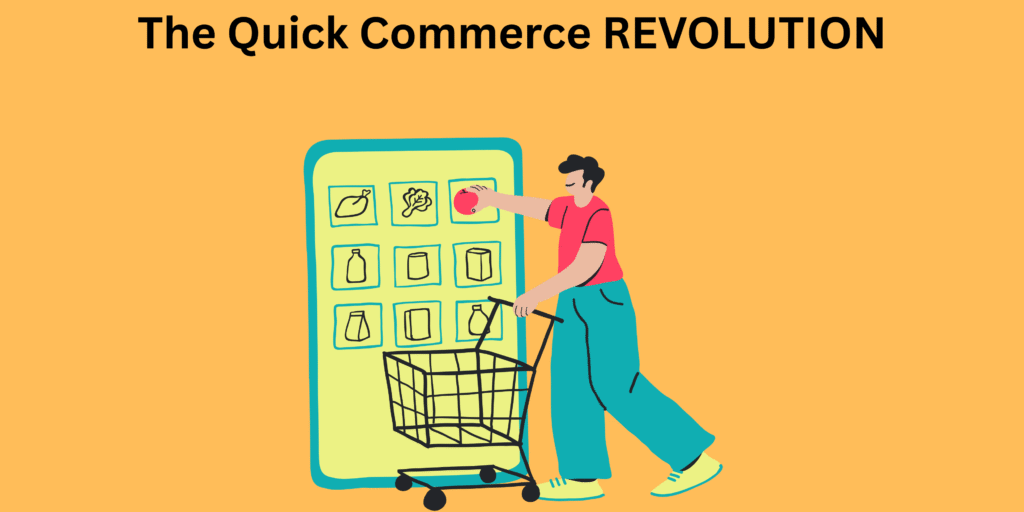
You’re watching your favorite Netflix show on a rainy Sunday evening, munching on chips, when suddenly you run out. Ten minutes later, your doorbell rings with a fresh packet of your favorite snacks. Sounds like magic? Welcome to the world of quick commerce, or “q-commerce” as the cool kids call it! India has gone absolutely CRAZY for super-fast deliveries, & honestly, who can blame us?
Quick commerce has become the new superhero of Indian shopping. Companies like Blinkit, Zepto, & Swiggy Instamart promise to deliver everything from milk & bread to phone chargers & medicines in just 10-30 minutes. It’s like having a mini supermarket that flies to your doorstep! This trend has completely changed how we think about shopping. Remember when waiting a week for online orders felt normal? Now, waiting more than 30 minutes feels like TORTURE!
The timing couldn’t have been more perfect. The pandemic taught us to stay indoors, & Indians discovered that getting stuff delivered quickly wasn’t just convenient – it was absolutely ESSENTIAL. Young professionals working from home, busy parents juggling kids & careers, & college students living away from family all found their perfect shopping solution. Quick commerce didn’t just grow; it EXPLODED across Indian cities like fireworks on Diwali night!
The PERFECT Storm: Why India Embraced Quick Commerce
Digital Infrastructure Revolution
India was practically waiting for quick commerce to arrive, even though we didn’t know it! Several factors came together like ingredients in your grandmother’s secret recipe, creating the perfect environment for this shopping revolution.
First, smartphones became super affordable. Almost everyone has one now, from your neighbor’s teenager to your local vegetable vendor. These pocket-sized computers made ordering stuff as easy as sending a WhatsApp message. Digital payments through UPI, Paytm, & other apps made transactions smoother than butter on hot toast. No more fumbling for exact change or worrying about carrying cash!
Urban Lifestyle Changes
Indian cities grew bigger & BUSIER, but our grocery stores didn’t multiply as fast. Traffic became a nightmare, & parking? Don’t even get us started! Going to the market for a packet of salt started feeling like planning a military operation. Quick commerce apps became our knights in shining armor, saving us from traffic jams & long checkout lines.
The pandemic was like adding rocket fuel to this fire. Suddenly, everyone was stuck at home, scared to go out, but still needing groceries, medicines, & random stuff. People who had never ordered online before were downloading apps & placing orders. Your mom, who used to inspect every tomato personally at the market, started trusting someone else to pick her vegetables! That’s when you know real change has happened.
Consumer Behavior Shift
Young Indians, especially in cities like Mumbai, Delhi, Bangalore, & Hyderabad, became the biggest fans of quick commerce. They valued their time more than anything else. Why waste 2 hours going to a store when you could get the same stuff delivered in 20 minutes? This generation grew up with instant everything – instant noodles, instant messages, instant videos. Instant shopping felt natural!

The PLAYERS: Who's Racing to Your Doorstep
Leading Quick Commerce Platforms
The quick commerce space in India looks like a thrilling cricket match with several teams competing for the championship trophy. Each player has their own strategy, strengths, & fan following.
Blinkit (formerly Grofers) became one of the early champions in quick commerce. They started as a regular grocery delivery service but quickly pivoted to the 10-minute delivery model. Their bright yellow branding became as recognizable as McDonald’s golden arches in many Indian neighborhoods. Blinkit focused heavily on building small warehouses called “dark stores” in residential areas. These aren’t regular stores where customers walk in – they’re like secret bases where workers pick & pack orders at lightning speed!
Emerging Market Disruptors
Zepto emerged as the YOUNG rebel challenging established players in quick commerce. Founded by two Stanford dropouts who returned to India, Zepto promised 10-minute deliveries & actually delivered on that promise! Their purple-colored delivery bags became a common sight on Indian roads. What made Zepto special was their obsession with speed & their ability to raise massive amounts of funding from investors who believed in their vision.
Swiggy, already famous for food delivery, launched Swiggy Instamart to enter the quick commerce game. They had a huge advantage – millions of customers already trusted them, & they had delivery partners in every corner of major cities. Swiggy used their existing network to expand into groceries & daily essentials. Smart move!
Traditional Players Adaptation
Amazon & Flipkart, the giants of Indian e-commerce, couldn’t ignore the quick commerce trend. Amazon launched same-day & 2-hour delivery services in select cities, while Flipkart experimented with quick delivery through Flipkart Quick. However, these established players found it challenging to compete with the pure-play quick commerce companies who were built specifically for speed.
Each company tried different tricks to win customers. Some offered lower prices, others focused on product variety, & many threw in free delivery or cashback offers. The competition became so intense that customers started feeling like royalty – everyone was trying to serve them faster & better!

The MAGIC Behind the Madness: How 10-Minute Delivery Actually Works
Dark Store Network Strategy
Ever wondered how your packet of biscuits travels from a warehouse to your hands in just 10 minutes? It’s not actual magic, but the logistics behind quick commerce are pretty AMAZING & complex!
The secret sauce of quick commerce is something called “dark stores” or “micro-warehouses.” These are small warehouses located within 2-3 kilometers of residential areas. Unlike regular stores, customers can’t walk into these places. They’re purely for storing popular items & fulfilling online orders. Companies analyze data to figure out what people in each neighborhood buy most often. A dark store in a college area might stock more instant noodles & energy drinks, while one in a family neighborhood focuses on milk, bread, & vegetables.
Technology & AI Integration
Technology plays a HUGE role in making quick commerce work smoothly. Sophisticated algorithms predict what items will be needed when & where. These computer programs are like fortune tellers, but instead of predicting your love life, they predict that people in your area will need more ice cream on hot Sunday afternoons or more umbrella during monsoon season!
Delivery partners are the real heroes of the quick commerce story. These brave souls navigate through crazy Indian traffic, narrow lanes, & unpredictable weather to bring you your orders. Companies provide them with GPS-enabled smartphones, efficient routes, & sometimes even electric scooters to zip through traffic faster. Many delivery partners can complete 3-4 deliveries in an hour during busy periods!
Supply Chain Optimization
Inventory management in quick commerce is like playing a very complicated video game. Companies need to ensure popular items never go out of stock while avoiding overstocking items that might expire. They use artificial intelligence to track purchasing patterns, seasonal trends, & even local events that might affect demand. Cricket match finals, festival seasons, & even weather changes influence what people order!
The entire quick commerce operation runs like a well-oiled machine. When you place an order, the nearest dark store gets notified instantly. Workers pick your items from shelves using handheld devices, pack them carefully, & hand them to a delivery partner who’s already on the way. Everyone involved knows they’re racing against time, & surprisingly, they usually win that race!
CHALLENGES & Growing Pains
Financial Sustainability Issues
Quick commerce isn’t all sunshine & rainbows. Like any rapidly growing industry, it faces several SERIOUS challenges that keep company founders awake at night.
Money is probably the biggest headache in quick commerce. Companies burn through cash faster than a bonfire burns wood! They spend heavily on dark stores, delivery partners, technology, & customer acquisition. Many companies offer products at discounted prices & free delivery to attract customers, which means they lose money on every order. The hope is that once they gain enough customers & achieve scale, they’ll become profitable. It’s like investing in a gym membership – painful at first, but hopefully worth it in the long run!
Workforce & Operational Challenges
Delivery partner welfare is another major concern in quick commerce. These hardworking individuals face pressure to deliver orders super fast, often in challenging weather conditions & heavy traffic. Questions arise about fair wages, safety equipment, insurance, & working hours. Some delivery partners work extremely long hours to earn decent money, which raises concerns about their health & safety.
Customer expectations in quick commerce keep getting HIGHER. What started as 30-minute deliveries became 20 minutes, then 15 minutes, & now some companies promise 10 minutes! Customers love fast service, but they also expect perfect quality, right products, & excellent packaging. Managing these expectations while maintaining speed is like trying to juggle flaming torches while riding a bicycle!
Market Competition & Regulation
Competition in quick commerce is fierce & sometimes destructive. Companies spend massive amounts on marketing & discounts to steal customers from competitors. This leads to unsustainable pricing & unrealistic promises. Some areas have too many quick commerce options, while others have none at all. The market is still figuring out how many players can survive long-term.
Regulatory challenges add another layer of complexity to quick commerce. Local governments sometimes struggle to create appropriate rules for this new industry. Issues around licenses, taxation, labor laws, & traffic management need clearer guidelines. Some cities have restrictions on delivery timings or routes that affect operations.
The FUTURE Looks Lightning Fast
Expansion & Market Growth
Quick commerce in India is just getting started, & the future looks EXCITING! Experts predict this industry will grow bigger than anyone imagined, changing how Indians shop forever.
Expansion beyond major cities is inevitable for quick commerce. Tier-2 & tier-3 cities are getting better internet connectivity, more smartphones, & growing disposable income. Companies are already testing waters in places like Indore, Chandigarh, & Kochi. Rural areas might take longer, but even they’ll eventually join the quick commerce revolution as infrastructure improves.
Product Category Evolution
Product categories in quick commerce will expand dramatically. Currently, most quick commerce focuses on groceries & daily essentials. Soon, we might see 10-minute delivery of electronics, books, medicines, beauty products, & even fresh meals! Imagine ordering a new phone charger & getting it delivered before your current phone dies completely!
Technology Advancement
Technology will make quick commerce even more AMAZING. Drones might start delivering orders in traffic-free zones. Artificial intelligence will predict your needs so accurately that items might reach your doorstep before you even realize you need them! Smart refrigerators might automatically order milk when you’re running low.
Sustainability will become more important in quick commerce. Companies are already experimenting with electric vehicles, eco-friendly packaging, & carbon-neutral deliveries. Future quick commerce might not just be fast & convenient, but also environmentally responsible.
Integration with other services will create super-apps in the quick commerce space. Your quick commerce app might also handle your food delivery, cab bookings, bill payments, & entertainment subscriptions. One app to rule them all!

Conclusion: The Quick Commerce Revolution Continues
The quick commerce BOOM in India represents more than just fast deliveries – it’s a fundamental shift in how we live, shop, & think about convenience. This revolution started with simple grocery deliveries but has transformed into a lifestyle choice for millions of Indians. Companies that can balance speed, quality, sustainability, & profitability will shape the future of retail in India.
As customers, we’ve been spoiled by the convenience & speed of quick commerce. There’s probably no going back to the old ways of shopping. The challenge now is ensuring this industry grows responsibly, treating workers fairly, serving customers genuinely, & contributing positively to society. The quick commerce sector must address its financial sustainability challenges while maintaining the service quality that made it popular in the first place.
The next time your doorbell rings with a 10-minute delivery, remember – you’re part of a HISTORIC transformation in Indian commerce! The quick commerce industry will continue evolving, bringing new innovations, better services, & more convenience to our daily lives. This is just the beginning of a retail revolution that will define how future generations shop & live in India.

Hi! Do you know if they make any plugins to safeguard against hackers? I’m kinda paranoid about losing everything I’ve worked hard on. Any suggestions?